(Mis)Communication
In the context of international partnerships, communication challenges are to be expected. While these challenges are often attributed to language barriers, communication involves much more: it depends on styles, gestures, and ways of listening shaped by cultural backgrounds. It is only when we are placed in environments that make us question what was once automatic for us, that we become aware of these more-than-verbal aspects.
![]()
Wyioni group breaking the ice with laughter
When we began this partnership between women from different countries, we never imagined that one of our biggest obstacles would be silence. We tried to create a “common language,” resorting to a mix of English and Swahili, and a jargon of our own projects, but this did not bring us closer. Gradually, we realized that laughing at simple things, chatting about daily tasks, and navigating discomfort together were more effective ways of connecting. Thus the ice of silence began to melt.
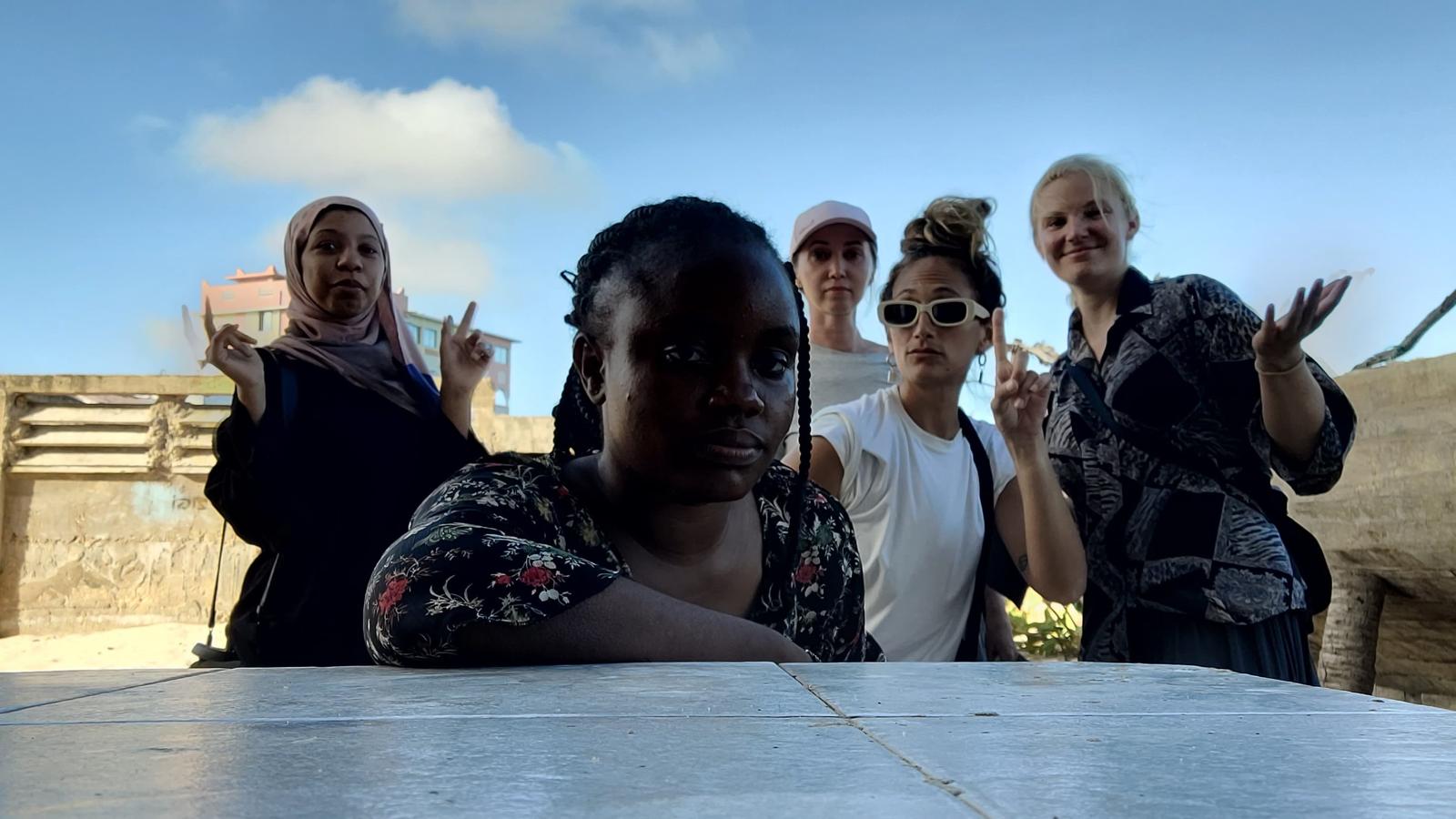
Wyioni group breaking the ice with laughter
We learned that communication is not confined to formal language. It is built through the in-between spaces, the pauses, the shared emotions, and the willingness to create meaning together.
When we began this partnership between women from different countries, we never imagined that one of our biggest obstacles would be silence. We tried to create a “common language,” resorting to a mix of English and Swahili, and a jargon of our own projects, but this did not bring us closer. Gradually, we realized that laughing at simple things, chatting about daily tasks, and navigating discomfort together were more effective ways of connecting. Thus the ice of silence began to melt.